Computer Vision Engineer
I work on detection and raster pipelines that have to survive contact with real imagery, where the input is never as clean as the training set and accuracy on a benchmark tells you very little.
- Currently
- AI Software Engineer at Magic Makers Lab
- Based in
- Lahore, Pakistan, working remotely
- Stack
- Python / PyTorch / Scikit-learn / YOLO / OpenCV / PIL / Rasterio / FastAPI
Robustness comes from the pipeline, not the checkpoint
A logo in a real marketing asset is small, angled, half covered, or lit wrong. I normalise scale, lighting, and viewpoint before inference, which recovered far more accuracy on those cases than further training did.
Detection is rarely the whole verdict
Finding the logo only answers part of the question. I extended the brand compliance pipeline with typography and colour matching, so the output is whether an asset follows the brand system rather than just whether a mark is present.
Geospatial imagery is its own discipline
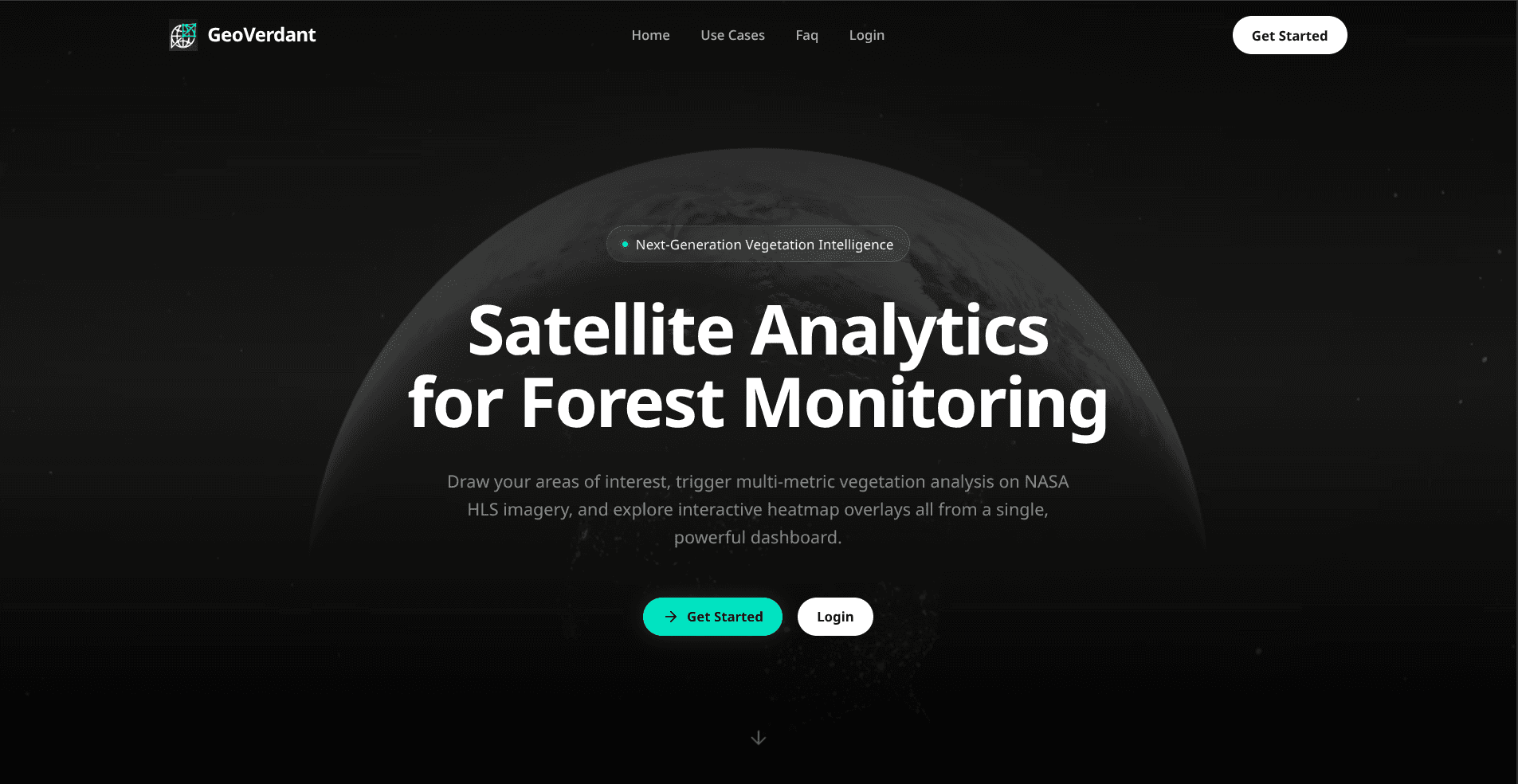
Multi-spectral work means aligning bands, handling rasters far too large for memory-naive processing, and computing indices across them. I use Rasterio over NASA HLS scenes and render the result as something a non-specialist can read.
The work behind this
Built at Magic Makers Lab. Each links to a full case study.
Common questions
- Which detection stack do you use?
- YOLO for detection, with OpenCV and PIL for the pre-processing around it, and PyTorch for training. Object tracking on top where the task is continuous rather than per-frame.
- How do you deal with occlusion and viewpoint variation?
- Pre-processing that normalises scale, lighting, and viewpoint before the detector sees the image. In the brand compliance pipeline this is what made partial occlusion tractable; raw detection accuracy alone collapsed on those cases.
- Have you worked with satellite or multi-spectral data?
- Yes. Geoverdant retrieves NASA HLS imagery, processes multi-spectral rasters with Rasterio, computes vegetation indices across aligned bands, and generates heatmap visualisations, all in background workers behind a dedicated FastAPI processing service.
- Can you take a vision model to production, or only prototype it?
- To production. Both vision projects include the serving layer, the containerised pipeline, and the persistence, not just the model.
Need this on your team?
I am open to AI engineering and backend roles, and to contract work on vision, agentic, or event-driven systems.